Written by: Sarah Lynn
Let me be completely upfront with you. When I booked a solo trip to Maui, the original plan was to lay on a beach, drink something with a tiny umbrella in it, and convincingly pretend I had my life together for seven consecutive days. That was it. That was the whole plan. A solid, responsible plan involving maximum sunscreen and minimum effort.
Then someone at the hotel mentioned Molokini Crater, and everything went sideways in the best possible way.
Within 48 hours of landing, I was standing on a catamaran at 6:30 in the morning, wearing a borrowed wetsuit that fit like a damp potato sack, preparing to plunge my face into the Pacific Ocean alongside a group of strangers who all looked significantly more prepared than I was. I had zero snorkeling experience. I had moderate swimming experience. I had an enormous amount of confidence in my ability to panic quietly so that the people around me would not notice.
This is that story.
Table of Contents
Why Maui Kept Whispering ‘Get in the Water’
Maui is the kind of place that makes you feel mildly guilty for spending time on dry land. You show up expecting a nice tropical vacation, and the island just keeps throwing increasingly beautiful ocean-related content at you until you cave. Turquoise water here. Snorkel rental shop there. A brochure photo of a sea turtle that looks so serene and wise it feels like a personal challenge to your entire lifestyle.
According to the Hawaii Visitors and Convention Bureau, Maui is consistently ranked among the top island destinations in the world for independent travelers, and a huge part of that reputation comes down to how accessible and thoughtfully organized the ocean experience is here. This is not one of those destinations where you need to be an extreme athlete or a former Navy SEAL to enjoy the water. You just need to be willing to show up. Which I was. Reluctantly, early in the morning, in a wetsuit with opinions about my torso. But I showed up.
The key thing to understand about Maui’s ocean pull is that it does not really let you opt out. Every direction you look, the water is doing something visually outrageous. A pod of spinner dolphins arcing through the harbor. A humpback whale breaching in the distance while you are just trying to drink your morning coffee. The ocean here has absolutely no interest in letting you scroll your phone in peace.
Read More: Luxurious Honeymoon in Hawaii
Booking the Tour: A Process That Involved Me Second-Guessing Myself Approximately 40 Times
Before I get into what actually happened underwater, let me walk you through the booking process, because it was genuinely one of the easier travel decisions I have ever made, and I still managed to overthink it for 48 hours like it was a mortgage application.
I went with Pride of Maui, a family owned and operated tour company that has been running ocean excursions out of Maalaea Harbor since 1983. That last part mattered to me. I have a lot of respect for businesses that have been doing the same thing for over 40 years without catching fire, going viral for the wrong reasons, or quietly becoming something unrecognizable. That is a track record. That is institutional knowledge. That is a company that has seen a lot of nervous solo travelers in rented wetsuits and knows exactly how to handle them.
The reviews were excellent across every platform I checked. The website was clear, the pricing was transparent, and when I called to ask a genuinely dumb question about whether I needed to bring my own fins, the person on the phone was patient and kind in a way that suggested they have fielded this exact call from anxious first-timers many, many times and have made peace with it. I booked the morning Molokini Snorkel Tour and immediately celebrated by lying awake worrying about it until my alarm went off.
Molokini Crater: Nature Showing Absolutely No Restraint
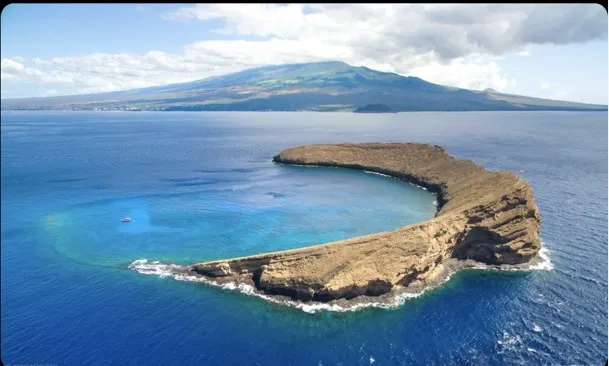
Molokini Crater sits about three miles off the southwestern coast of Maui. It is a partially submerged volcanic crater that looks, from above, like a crescent moon decided to take a nap in the ocean sometime during the last ice age and just never left. The waters inside the crater are protected from wind and currents, which is a polite scientific way of saying conditions are ideal for people like me who would otherwise be gently tumbled down the coastline like a bewildered pool noodle with ambitions.
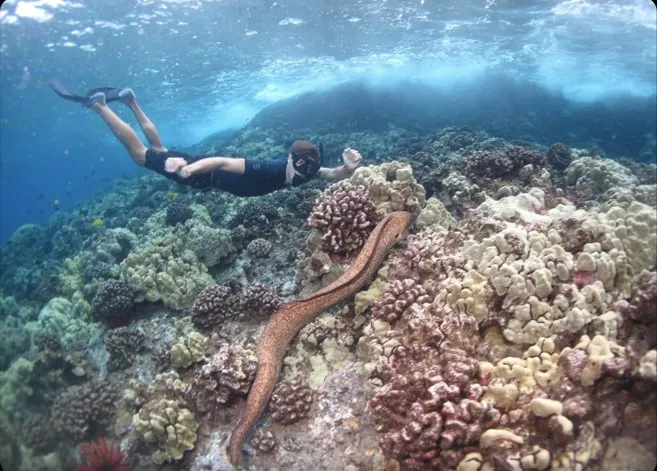
According to the National Oceanic and Atmospheric Administration (NOAA), the protected marine area around Molokini supports more than 250 species of fish, over 40 types of coral, and underwater visibility that can stretch past 100 feet on a clear morning. For reference, 100 feet of visibility means you can see things that are very, very far away from you. Things like reef sharks. I want to be clear that I am not raising this point to alarm you. I am raising it because it happened and I need somewhere to process it.
The reef shark was roughly 30 feet below me, moving slowly along the sandy bottom and minding its absolute business. The crew had told me before we entered the water that whitetip reef sharks are not interested in eating humans. My brain accepted this information completely. My body, however, had a separate and much more dramatic reaction, and for approximately four seconds I considered attempting to teleport back to the boat using sheer willpower. I did not teleport. I kept snorkeling. And then a school of yellow tang came through in a tight, coordinated swarm that looked exactly like an animated screensaver from 2003, and I forgot entirely about the shark because yellow tang are extraordinary and I refuse to be distracted from them.
That is the defining feature of Molokini. It keeps replacing your anxiety with something more interesting. You cannot stay worried in there. There is simply too much going on.
The Catamaran Experience, or: How I Made Friends With Strangers Before 9 AM
One of the genuinely unexpected pleasures of a solo ocean tour is how naturally social the whole experience is. You board the catamaran as strangers, you collectively adjust to the rocking of the boat, and somewhere between the harbor and the open water you find yourself in a real conversation with a retired couple from Ohio on their fifth Maui trip, and a pair of travel nurses from Seattle who have been planning this morning for two years, and suddenly you are a group.
The Pride of Maui crew set the tone immediately. The pre-snorkel safety briefing was thorough without being stiff. The gear orientation was helpful and genuinely funny. One of the crew members demonstrated how to clear water from a flooded snorkel mask with the energy of someone who has given this exact presentation about ten thousand times and still finds it deeply entertaining. It worked. Everyone laughed. Everyone paid attention. Airlines, take notes.
The catamaran itself was spacious and well-equipped in ways that mattered. There was a generous sun deck that became prime real estate within about ten minutes of departure. There was a shaded indoor cabin for when you needed a break from the sun. There was a freshwater shower on deck for rinsing off after snorkeling, which felt like an extraordinary luxury that I used twice. There was also a deli-style breakfast spread that I fell on like I had not eaten in four days, which is slightly dramatic but also technically accurate because I had been too nervous to eat much that morning.
By the time we anchored at Molokini, I was genuinely, actively grateful that I had not listened to the part of my brain that wanted to stay at the hotel eating waffles and watching cable television. That part of my brain is wrong about a lot of things and this was one of its worst suggestions.
Turtle Town: Where the Turtles Are and This Is Not a Metaphor
After Molokini, the tour moves to a second snorkel stop along the coastline, often Turtle Town, a reef area near Makena where Hawaiian green sea turtles, called honu in Hawaiian, are regularly spotted. I want to prepare you for this part of the trip, because nobody prepared me, and I think you deserve a fair warning.
Green sea turtles are enormous, serene, and completely unbothered by the presence of humans floating nearby. They move through the water with a slow, unhurried grace that makes your own swimming technique look like a panicked kindergartner running from a bee. You hover there at the surface, watching a 300 pound turtle glide past the coral at a pace that suggests it has genuinely never been in a hurry about anything in its entire life, and you think: this creature’s lineage has been on earth for 70 million years, and it shows. There is real wisdom in those eyes. Ancient, deep wisdom. Possibly also mild judgment about the snorkel situation.
The crew is excellent about reminding guests that touching the turtles is not permitted, and that maintaining respectful distance is part of what keeps this experience available for future visitors. The Hawaiian green sea turtle is protected under the Endangered Species Act and Maui takes marine conservation seriously. Reef safe sunscreen is required, not just suggested, and the crew communicates this clearly and without apology. Spend twenty minutes watching a sea turtle in its natural environment and you will become intensely and permanently invested in the long-term wellbeing of sea turtles as a species. I now have opinions about this.
Read More: Best Girls Trip Destinations in the US
Whale Season: When Maui Turns the Volume All the Way Up
If there is any such thing as fate in travel, it is the kind that arranges for you to be in Maui between December and April. That is when the North Pacific humpback whales migrate to the warm Hawaiian waters to breed and give birth, and the ocean around Maui effectively becomes the most dramatic wildlife documentary you have ever been inside. Except there is no narrator. Just you, a catamaran, and approximately 40 tons of animal launching itself into the air directly off your bow.
Humpback whales are not small. A full-grown adult can reach 60 feet in length and weigh up to 40 tons. When one of them decides to breach directly off the side of your catamaran, time does something strange. Everything slows down. The whale clears the surface and hangs for a split second in what feels like a deliberate violation of the rules of physics, and then crashes back into the ocean with a sound and a shockwave that you feel somewhere deep in your sternum. I watched this happen twice in a single morning and both times I made noises that I am choosing not to describe in print.
February and March are peak season, when whale sightings are nearly guaranteed and behavior is at its most active. Some tours combine whale watching with a snorkel stop, which means you can fit two genuinely extraordinary experiences into a single morning before most of the people at your hotel have finished breakfast. If your travel dates overlap at all with whale season, build your entire schedule around this. Do not be the person who checks out the morning after the whales showed up. I have heard stories. Nobody recovers from that quickly.
The Sunset Dinner Cruise: Because You Earned This
Let me tell you something about the Maui sunset dinner cruise that I was not remotely prepared for: it is genuinely romantic, even when you are completely by yourself, eating a plate of food at a two-top table while watching a couple get engaged on the upper deck.
Actually, that part was fantastic. The entire boat erupted. It was a whole production. I cried a small amount and plausibly blamed ocean mist.
The sunset cruise departs in the late afternoon and runs along the Maui coastline as the sky shifts from gold to a deep, burning orange to a pink that does not look like a real color that exists in nature. There is live Hawaiian music playing on deck, a hot dinner that is significantly better than catamaran food has any right to be, and an open bar that I will describe diplomatically as appropriately generous. The water is calm at that hour. The temperature is perfect. The energy on the boat is the kind that comes from a group of people who have all just had excellent days and know it.
Solo travel sometimes carries this background hum of self-consciousness, like you are supposed to be apologetic about doing things by yourself. A sunset sail on a catamaran along the Maui coast at dusk cures you of that immediately. A table for one out there is not a sad thing. It is a very intentional, very good thing, and the view does not care how many people are sitting in your chair.
Things Worth Knowing Before You Book (The Practical Stuff)
You have made it this far, which means you are seriously considering doing this. Here is the practical breakdown so you do not have to learn any of it the hard way.
Book early. Particularly between December and March, the popular morning Molokini tours fill up fast. Do not be checking availability from your hotel room the night before your last full day on Maui. You will feel a specific, preventable sadness and it will follow you home.
Show up on time. Maalaea Harbor is straightforward to find but give yourself enough buffer to park, check in, and collect your gear before departure. The boats run on a schedule. The ocean does not accommodate late arrivals.
Bring motion sickness medication if you are at all prone to it. The open water crossing between the harbor and Molokini can be choppy depending on conditions. Take the medication before you board, not after things start feeling bad. This is wisdom I am passing along from a different trip and I want you to have it.
Bring reef safe sunscreen. Not regular sunscreen with a small eco-friendly label on it. Actually reef safe sunscreen. The coral system at Molokini is protected and it matters, and the crew will ask. Budget accordingly.
Bring a waterproof phone case or a GoPro if you have access to one. The underwater visibility at Molokini is extraordinary and you will want documentation. Trust me on this. When you tell people about the reef shark later, they will not believe you without a photo.
The Part Where I Tell You This Changed Me and You Can Tell I Mean It
I went to Maui to lie on a beach and drink things with tiny umbrellas. That was the plan and there was nothing wrong with the plan.
What actually happened was that I spent the most memorable morning of the entire trip underwater, watching a reef shark do absolutely nothing threatening while a school of yellow tang detonated my brain thirty feet above it. I floated beside a sea turtle that was older in spirit than anything I had ever been close to. I watched humpback whales breach. I ate a good breakfast before 8 AM on a moving catamaran and made actual friends with strangers from three different states. I cried at a stranger’s engagement on a sunset cruise and felt no embarrassment about it whatsoever.
Maui has a lot of ways to spend your time, and most of them are genuinely good. But the ocean here is a different thing entirely. It is the kind of experience that recalibrates your sense of scale, that reminds you the world is enormous and filled with living things that have been doing their thing for millions of years with zero input from us, and that we are extraordinarily lucky to be allowed to witness any of it.
Also the sea turtles are profoundly cute and I will not have anyone suggesting otherwise.
Book the tour. Get in the water. You will either come home completely changed or you will cry on a sunset cruise about someone else’s relationship milestone, and honestly, both of those outcomes are a perfectly valid use of your vacation time, and as always, Travel Till You Drop!