
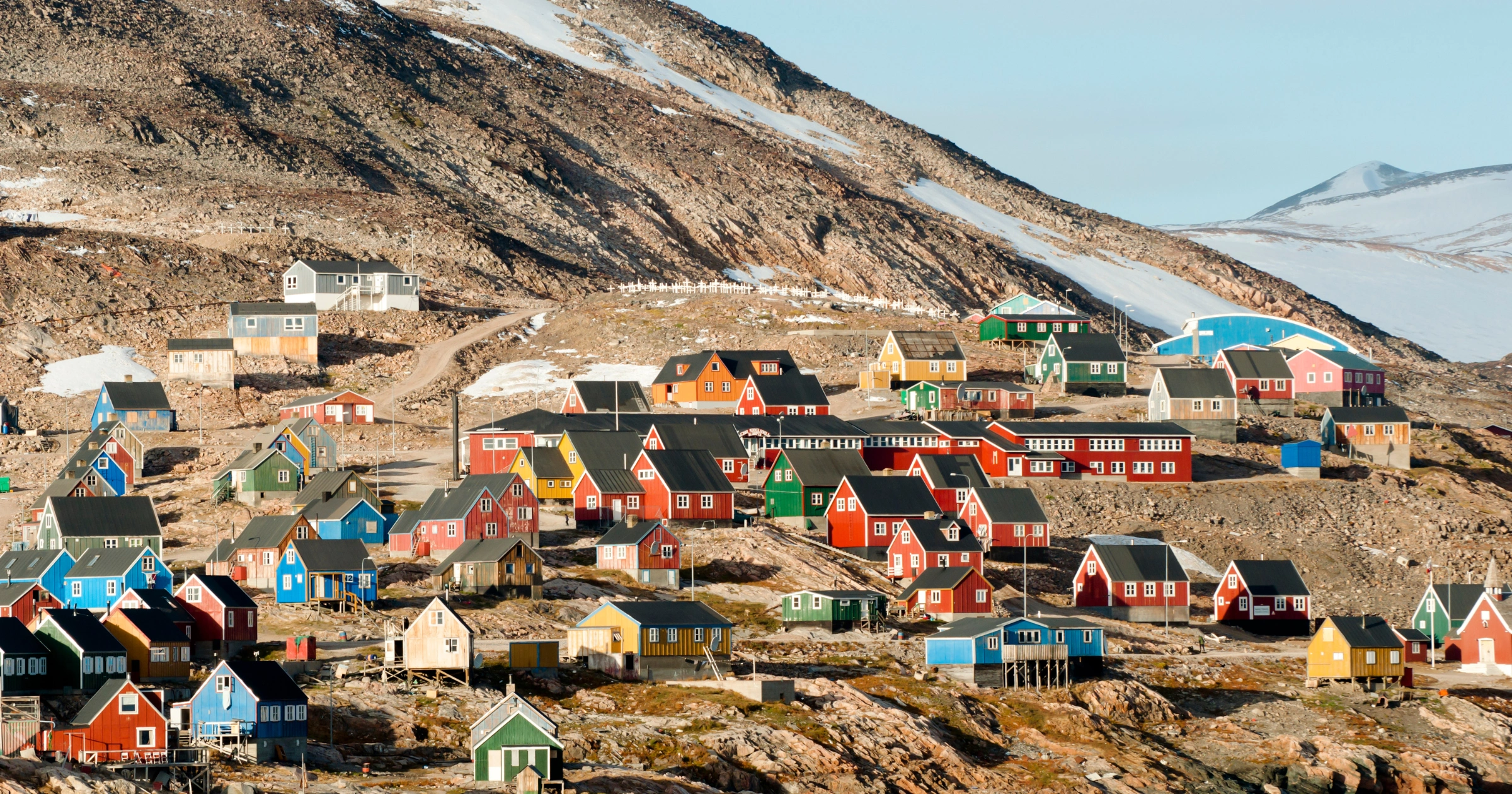
Ittoqqortoormiit is one of the most remote places on Earth. It sits far from the usual travel maps. Few people ever visit this tiny Arctic town in Northeast Greenland.
The area is frozen for most of the year. Wildlife here outnumbers humans by a huge margin. The name is rare, just like the place itself.
This small settlement sits at the edge of Scoresbysund. Scoresbysund is the largest fjord network on the planet. Giant icebergs and stunning landscapes surround it on all sides.
Ittoqqortoormiit is also a key entry point to the Northeast Greenland National Park. This is the biggest national park in the world. It is so vast and wild that it gives you a true sense of what real isolation feels like.
Ittoqqortoormiit is hidden in the far east of Greenland. It is one of the most isolated places on Earth. This small town offers raw Arctic scenery and rich local traditions.
This is not a place for regular tourists. It is for travelers who love silence over crowds. It is for those who choose real adventures over comfort and luxury.
Do you prefer expeditions over holidays? Do you love nature more than Wi-Fi? Then this guide is made for you.
Here is everything you need to know about taking a cruise to Ittoqqortoormiit, one of the most remote towns on Earth.
Table of Contents
Ittoqqortoormiit: Overview and History

Ittoqqortoormiit is one of the most isolated places on Earth. It sits deep in the Arctic wilderness of East Greenland. Only a small number of people live here. There are no roads connecting it to the outside world.
Life in this town is shaped by extreme cold, long winters, and nature. The settlement is located near Scoresbysund, the largest fjord system in the world. Giant icebergs and frozen seas surround it. The landscapes are vast and untouched.
Sea ice blocks access for most of the year. Ships and helicopters can only reach the town during a short window of time.
History of Ittoqqortoormiit, East Greenland
Ittoqqortoormiit was founded in 1925. Danish explorer Ejnar Mikkelsen started the settlement. He came with a group of Inuit families from western Greenland. The goal was to build a permanent community in East Greenland and support hunting in the region.
Over time, the town grew its own strong identity. It is rooted in traditional Inuit culture. Hunting has always been at the heart of survival here. Seals, narwhals, and polar bears were the main animals hunted. Modern life has slowly made its way into the town, but old traditions remain strong.
Ittoqqortoormiit is a true symbol of resilience. For generations, people here have lived in balance with the harsh Arctic. They have kept their traditions alive while facing the challenges of the modern world.
What makes Ittoqqortoormiit unique

Ittoqqortoormiit is often called the “edge of the world.” It is easy to see why. This place is unique because of its extreme location, tiny population, and ancient way of life.
Here is what makes it so special:
1. Extreme Isolation
Ittoqqortoormiit is considered the most remote inhabited community in the Western Hemisphere.
There are no roads to this town. You can only reach it by helicopter or boat. Ships can enter only during a short window in summer when the sea ice melts.
For most of the year, thick pack ice cuts the town off from the rest of Greenland and the world.
2. Gateway to Two Natural Giants
This small town sits next to two of the biggest natural wonders on Earth.
- Scoresby Sund is the largest and longest fjord system in the world. It is full of giant icebergs and deep blue water.
- Northeast Greenland National Park is the biggest national park on the planet. It is almost 100 times the size of Yellowstone. Almost no humans live there.
3. A Living Hunting Culture
Many old traditions have faded around the world. Not here.
Local hunters still rely on the sea and ice to survive. They hunt seals, narwhals, and polar bears. They follow strict rules and quotas to hunt in a responsible way.
There are more sled dogs than cars in this town. Dog sledding is still a key way to travel during the long winter months.
4. Amazing Arctic Wildlife
Because this place is so isolated, Arctic wildlife thrives here. It is one of the best spots in Greenland to see wild animals.
You may spot polar bears near the town or on the ice. Muskoxen roam the tundra close by. Walruses and narwhals are often seen in the fjords.
5. A Small Town With a Big Heart
About 350 people live in Ittoqqortoormiit. Everyone knows each other. The sense of community is strong.
The town is known for its bright wooden houses. They are painted in bold reds, blues, and yellows. These colors stand out beautifully against the white snow and grey rock of the Arctic.
Life in Ittoqqortoormiit, East Greenland
Ittoqqortoormiit (pronounced it-tok-kor-toor-mit) is one of the most remote places on Earth. It sits on the eastern coast of Greenland. The town is at the mouth of Scoresbysund, the world’s largest fjord system.
As of 2026, around 325 to 360 people call this place home. They balance ancient Inuit traditions with modern technology.
1. The Rhythm of Daily Life
Nature runs the schedule here, not a clock. Sea ice isolates the town for nine months of the year. Self-reliance is not a choice. It is a necessity.
- The Two-Ship Economy: Only two supply ships visit per year. They bring food, fuel, and building materials. If something runs out at the local Pilersuisoq supermarket, residents may wait months for it to come back in stock.
- Hunting as Survival: Hunting is not a hobby here. It is a main food source. Residents hunt seals, musk oxen, narwhals, and polar bears. They follow a strict quota system. Dog sleds are used for hunting in March. Speedboats take over in the warmer month of August.
- Water Supply: Fresh water is delivered to homes by a water tank truck. The permafrost makes it nearly impossible to run underground pipes all year round.
2. Modern Challenges and Climate Change
This community respects tradition. But it is not stuck in the past.
- Staying Connected, you will see satellite dishes on the colorful wooden houses. Residents use social media and the internet. But the service can be slow and costly.
- Polar Bear Conflict: Sea ice is shrinking. Polar bears are coming onto land more often to find food. This means more encounters near the town. Dog food storage crates and the local dump are common hotspots. It is the law to carry a firearm when leaving town limits.
- Changing Ice Hunters say the sea ice now forms later in the year. It is also much thinner than before. Old dog sledding routes are becoming more dangerous. Many hunters are shifting to boats instead.
3. Travel and Getting There
Getting to Ittoqqortoormiit is an adventure on its own. There are no roads. The nearest Greenlandic town is over 800 km away.
- The route Most travelers fly from Reykjavik or Akureyri in Iceland to Nerlerit Inaat, also known as Constable Point. From there, the last 40 km into town is done by helicopter. In winter, a snowmobile or a dog sled can also be used.
- Tourism: The town has a small guesthouse and a museum. It is a starting point for expedition cruises into the Northeast Greenland National Park.
Culture and traditions at Ittoqqortoormiit, East Greenland

Ittoqqortoormiit (pronounced Ee-took-or-toor-meet) is one of the most remote places on Earth. Around 350 people live here. Their culture reflects their deep isolation. Life blends ancient Inuit traditions with modern survival skills. The town sits on the edge of Scoresby Sund, the world’s largest fjord system.
The Hunting Heartland
Hunting is at the heart of life in Ittoqqortoormiit. East Greenlanders, known as Tunumiit, are high Arctic hunters. This sets them apart from West Greenland, where fishing is more common.
Muskox, seals, and polar bears are key sources of food and income. Being a hunter, or “Piniartoq,” is a respected role in the community. It is not just a job. It is a vital service that feeds the whole town.
Snowmobiles exist here, but the Greenlandic Sledge Dog is still widely used. Dog sledding remains an important tool for hunting and travel during the long winter months.
Language and Identity
The people of Ittoqqortoormiit call themselves Tunumiit. They are East Greenlanders. Their culture and language are very different from those on the west coast of Greenland.
They speak Tunumiisut, the East Greenlandic dialect. It sounds more melodic than the official West Greenlandic language, Kalaallisut. Many everyday words are also different.
Europeans only discovered this region in the late 1800s. The town itself was founded in 1925. Because of this late contact, many ancient Inuit customs survived here longer than in other Arctic communities.
Social Traditions and Modern Life
Life here is full of warmth, even in the coldest months. Social life is especially lively during Polar Night, when the sun does not rise for two full months.
Kaffemik is a beloved Greenlandic tradition. It is an open house celebration held for birthdays, first hunts, or confirmations. Coffee, cakes, and traditional meats are served. Anyone is welcome to drop by.
The town is also known for its Tupilaks. These are small carvings made from bone or antler. In the past, people believed they had magical powers. Today, they are valued as detailed works of art and popular souvenirs.
On special occasions like the first day of school or National Day, residents wear the East Greenlandic national costume. Women wear sealskin trousers and tall beaded boots. The designs are unique to East Greenland.
The Seasonal
The ice sets the pace of life here.
In winter, people focus on ice fishing and dog sledding. The Northern Lights light up the sky above.
In summer, the sea ice breaks apart, usually in July or August. The community switches to boats for hunting. People also visit nearby uninhabited settlements during this time.
Best time to visit Ittoqqortoormiit, East Greenland

The best time to visit Ittoqqortoormiit depends on what you want to see and do. The town is cut off by sea ice for most of the year. So the season you choose decides not just what you experience, but also how you get there.
Late Winter to Spring (March to May)
This is the best time to see living Inuit traditions. The sea is still frozen. The community is at its busiest with ice activities.
Dog sledding and traditional hunting are in full swing. You can watch hunters head out to the floe edge. This is where the sea ice meets open water. They wait there to hunt seals.
You will arrive by helicopter from Constable Point. Days are getting longer, but nights are still dark enough to see the Northern Lights.
March and April are the top months for seal hunting on the ice. March is also a key time for muskox hunting.
Summer (July to August)
Summer is the only time Scoresby Sund, the world’s largest fjord system, is open to boats. Temperatures average between 5°C and 10°C.
Life moves to the water in this season. Locals fish for Arctic Char and hunt narwhals and seals by boat.
You can arrive by expedition cruise ship or boat transfer. The Midnight Sun means the sun never sets. You get 24 hours of daylight for exploring.
Locals visit summer camps and hold Kaffemiks to celebrate the return of the sun. It is a high-energy time filled with community events.
Autumn (September to October)
This is a short but stunning season to visit.
The focus shifts to preparing for winter. Muskox hunting runs from August to October. Locals stock up on meat for the cold months ahead.
The first sea ice starts to form. A golden light sits low on the horizon during Polar Twilight. Photographers love this season. It is also quieter, with fewer visitors than in the summer.
Polar Night (November to February)
Visiting in deep winter is rare and very challenging. The sun does not rise for several weeks.
Indoor life takes over. Residents focus on crafts like carving Tupilaks and gathering inside their colorful homes.
This season brings total darkness and extreme cold. Polar bear sightings are more frequent as the bears wander closer to town. It is the most intense and isolated experience you can have here. It truly shows the strength and resilience of the Tunumiit people.
How to Reach Ittoqqortoormiit, East Greenland, from the USA?

Getting to Ittoqqortoormiit is a journey in itself. There are no direct flights from North America to East Greenland. You must travel through Iceland first.
As of 2026, the trip follows four steps.
Step 1: Fly to Iceland (Keflavík)
Start by flying to Keflavík International Airport (KEF) from a major US city. Good options include JFK, EWR, BOS, SEA, or ORD.
Airlines that fly this route include Icelandair, United (seasonal), and Delta.
Tip: Plan at least one full night in Iceland. Flights to Greenland leave from different airports and depend heavily on the weather. A buffer day saves a lot of stress.
Step 2: Travel to Reykjavik or Akureyri
Flights to East Greenland do not leave from Keflavík. You need to get to one of two smaller airports.
Reykjavik Domestic Airport (RKV) is just a 45-minute drive from KEF.
Akureyri Airport (AEY) is further north. You can reach it by a 45-minute domestic flight from Reykjavik or a 5-hour drive.
Step 3: Fly to Constable Point (CNP)
From Iceland, you fly to Nerlerit Inaat, also called Constable Point. This is the closest airstrip that can handle fixed-wing aircraft.
The main airline on this route is Norlandair. Flights usually run once or twice a week. Typical days are Tuesdays from Reykjavik and Thursdays from Akureyri.
These are small Twin Otter planes. Luggage limits are strict, usually between 15 and 20 kg total. Pack light.
Step 4: The Final Leg into Town
Constable Point is about 40 km from Ittoqqortoormiit. There are no roads between them.
In winter and spring, a helicopter operated by Air Greenland is the only option. The flight takes just 15 minutes, and the views are stunning.
In summer, when the sea ice melts in late July or August, you can take a boat transfer instead. The ride takes about an hour and gives you a close look at the icebergs.
For a real adventure, some local guides offer snowmobile or dog sled transfers in spring. Book these well in advance as spots fill up fast.